
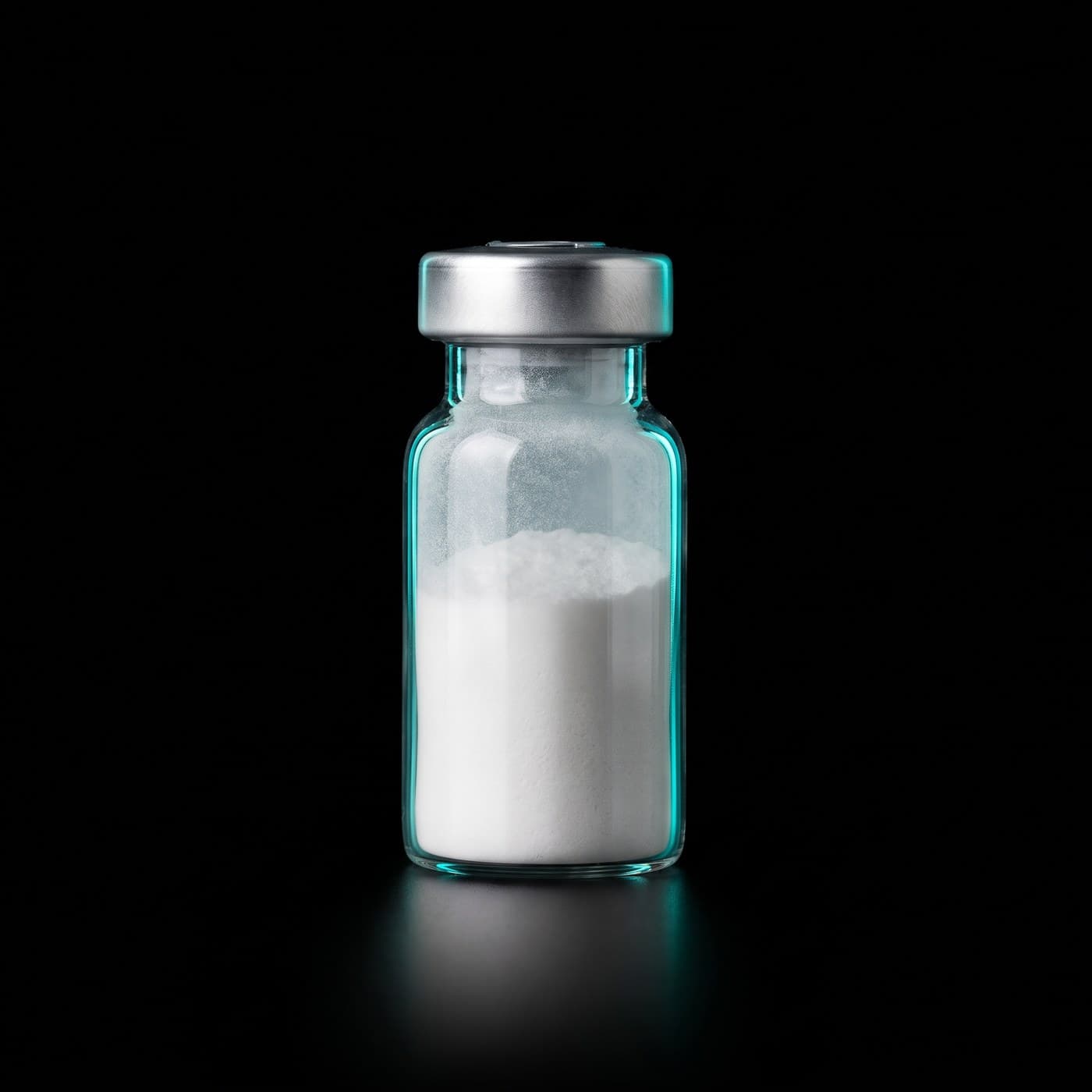
Oxytocin Nasal
A nine-residue neurohypophysial hormone with a well-characterised receptor and one of the largest literatures of any peptide in the catalogue. Supplied here as a nasal preparation.
- Purity
- 99.2%
- Lot
- PU-31DB
- Format
- Nasal solution
- Third-party tested
- Discreet packaging
- Same-day shipping
- Encrypted checkout
For research use only. Not for human consumption.
Mechanism of Action
Oxytocin is a cyclic nonapeptide produced in the hypothalamus and released from the posterior pituitary. It acts at a single characterised G-protein-coupled receptor whose structure, signalling and regulation were reviewed in Physiological Reviews in 2001 and again in 2018.
The receptor couples through Gq in the myometrium, producing the contractile response that underlies its obstetric use, while central oxytocin signalling has been examined separately in the context of neural plasticity and social behaviour. Reviews caution that peripheral and central pharmacology are not interchangeable.
Research Findings
The obstetric and pharmacological literature is mature, reviewed in the American Journal of Obstetrics and Gynecology in 2024 and in Pharmacological Reviews in 2020, the latter explicitly questioning the breadth of claims made for the peptide.
The behavioural literature - reviewed in the Annual Review of Neuroscience, Endocrinology and Biological Psychiatry - has repeatedly revised its own conclusions, with the social salience hypothesis offered as an alternative to simpler accounts.
Storage & Reconstitution
The supplied vial is stored sealed and refrigerated at 2-8 degrees C, protected from light, and brought to room temperature before it is opened. Nasal preparations are aqueous from the point of supply, so the stability considerations that apply to a reconstituted solution apply from the moment the container is received.
The spray device is kept upright and the actuator kept clean and dry. Priming the pump consumes a small volume, which should be accounted for when calculating the number of metered actuations available from a given fill volume. Do not decant into a secondary container: transfer steps introduce both contamination and adsorptive loss.
Nasal solutions are single-container preparations and are not refilled or topped up. Note that intranasal bioavailability is strongly formulation-dependent - the delivery literature cited above regards it as a parameter that must be measured for each peptide rather than inferred from the route.
- Physical form
- Aqueous nasal solution, metered pump
- Sealed storage
- 2-8 C, protected from light
- In use
- Upright, 2-8 C between uses
- Priming
- Consumes volume - account for it
- Avoid
- Decanting, refilling, freezing
Handling summary
References
Every entry below links to its PubMed record. Publication is not endorsement: several of these papers report limitations, negative findings or adverse events, and they are listed for that reason.
- [1]Oxytocin, Neural Plasticity, and Social Behavior(opens PubMed in a new tab)
Annu Rev Neurosci · 2021 · PMID 33823654
- [2]The physiology and pharmacology of oxytocin in labor and in the peripartum period(opens PubMed in a new tab)
Am J Obstet Gynecol · 2024 · PMID 38462255
- [3]Oxytocin, Vasopressin, and Social Behavior: From Neural Circuits to Clinical Opportunities(opens PubMed in a new tab)
Endocrinology · 2022 · PMID 35863332
- [4]The Oxytocin Receptor: From Intracellular Signaling to Behavior(opens PubMed in a new tab)
Physiol Rev · 2018 · PMID 29897293
- [5]The oxytocin receptor system: structure, function, and regulation(opens PubMed in a new tab)
Physiol Rev · 2001 · PMID 11274341
- [6]Is Oxytocin "Nature's Medicine"?(opens PubMed in a new tab)
Pharmacol Rev · 2020 · PMID 32912963